


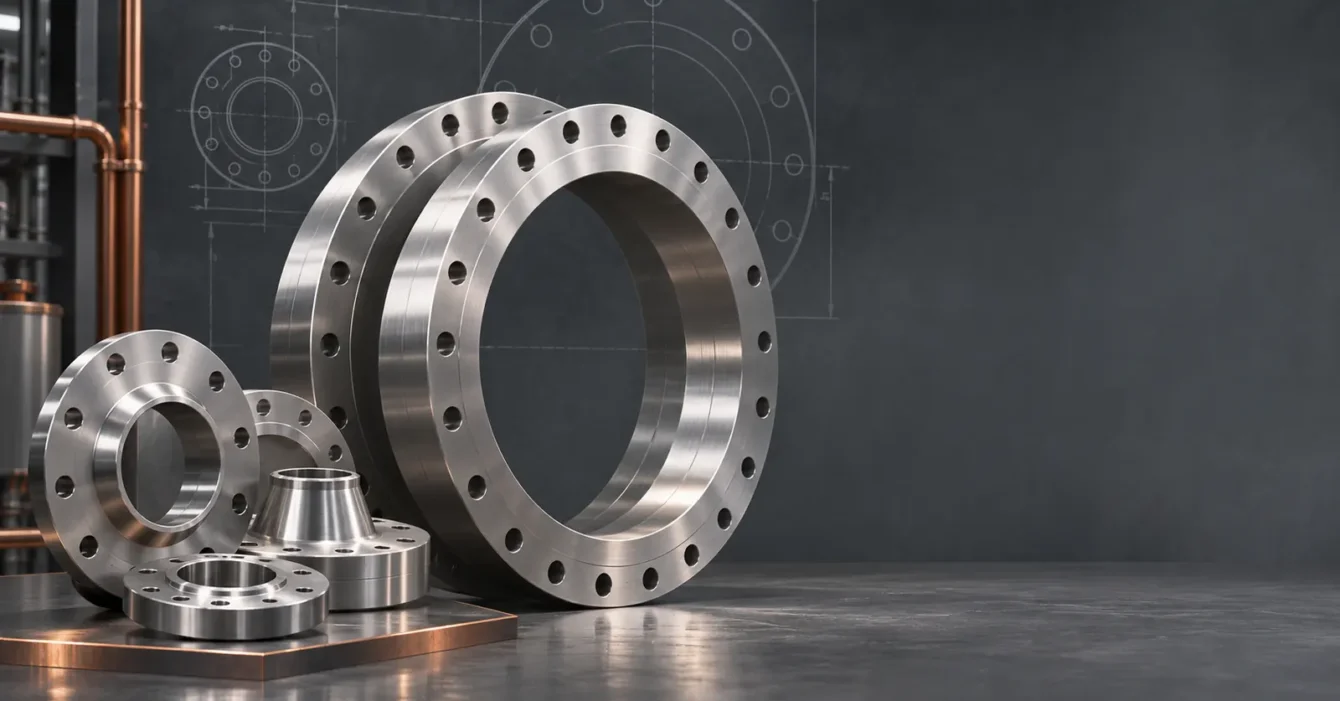
ASME B16.5 vs ASME B16.47: Understanding Industrial Flange Standards
Selecting the correct industrial flange is essential for piping system compatibility, operational reliability and compliance with engineering specifications. Two of the most widely referenced flange dimensional standards are ASME B16.5 and ASME B16.47.
Although both address steel pipe flanges, they cover different nominal pipe sizes and dimensional requirements.
For engineers, EPC contractors and procurement professionals, understanding these differences helps prevent incorrect material orders, mismatched flange connections and avoidable project delays.
What Is ASME B16.5?
ASME B16.5 is a standard covering pipe flanges and flanged fittings from NPS ½ through NPS 24.
It establishes requirements involving dimensions, pressure-temperature ratings, materials, tolerances, marking and testing.
For flanges, the standard includes Class 150, 300, 400, 600, 900 and 1500 across its stated nominal size range, while Class 2500 is covered through NPS 12.
ASME B16.5 is commonly referenced in industrial piping projects involving:
-
Oil and gas processing facilities
-
Petrochemical and refinery piping
-
Power generation
-
Industrial water and utility systems
-
Equipment and valve connections
Flanges covered by ASME B16.5 can include Weld Neck, Slip-On, Blind and other configurations, subject to the standard’s specific provisions.
What Is ASME B16.47?
ASME B16.47 addresses large-diameter steel pipe flanges from NPS 26 through NPS 60.
It covers relevant dimensional and technical requirements for pressure Class 75, 150, 300, 400, 600 and 900 flanges, within the applicable provisions of the standard.
Large-diameter flanges are often specified for major pipeline, water transmission, industrial processing and infrastructure applications.
Unlike ASME B16.5, ASME B16.47 also introduces an important distinction between two dimensional series: Series A and Series B.
ASME B16.5 vs ASME B16.47 — Key Differences
| Specification | ASME B16.5 | ASME B16.47 |
|---|---|---|
| Nominal size range | NPS ½–24 | NPS 26–60 |
| Pressure classes | 150–1500; 2500 for specified sizes | 75–900 |
| Dimensional series | B16.5 dimensions | Series A and Series B |
| Primary coverage | Pipe flanges and flanged fittings | Large-diameter steel flanges |
| Application | Standard industrial piping sizes | Large-diameter piping systems |
Important: Pressure class numbers are not fixed allowable working pressures in PSI. Actual pressure-temperature ratings depend on the material group, operating temperature and applicable standard tables.
Understanding ASME B16.47 Series A and Series B
One of the most important considerations for large-diameter flange procurement is identifying the correct series.
Series A
Historically associated with MSS SP-44 dimensional practices, Series A generally incorporates different outside diameters, bolt arrangements and dimensional characteristics from Series B.
Series B
Historically associated with API 605 dimensional practices, Series B provides a distinct dimensional configuration for applicable large-diameter flanges.
The two series are not automatically interchangeable. Depending on the flange size and class, bolt-circle dimensions, drilling arrangements and other features can differ.
A buyer should never assume that an NPS 36 Class 150 Series A flange will connect to a Series B flange merely because the nominal diameter and pressure class match.
Which Standard Should You Specify?
The starting point is the nominal pipe size and the approved piping specification.
For example:
NPS 12 Class 300 Weld Neck Flange
This would typically fall within ASME B16.5, subject to the specified material, facing and detailed dimensions.
NPS 36 Class 150 Weld Neck Flange
This would fall within the size range of ASME B16.47. The procurement specification must also identify the required Series A or Series B configuration.
NPS 72 Flange
NPS 72 is outside the standard dimensional ranges of both ASME B16.5 and ASME B16.47. Such a requirement calls for another applicable specification or a properly engineered, project-approved custom flange design.
Information Required Before Ordering Flanges
For industrial flange procurement, the following details should be confirmed:
-
Nominal Pipe Size (NPS)
-
Applicable standard and edition
-
Pressure class
-
Flange type and facing
-
Series A or Series B, where applicable
-
Material specification and grade
-
Matching pipe bore or wall thickness
-
Required testing and documentation
-
Quantity and delivery location
Accurate information reduces technical clarification cycles and helps suppliers identify compatible materials.
Why Flange Standards Matter in GCC Industrial Projects
Across the UAE, Saudi Arabia and wider GCC, industrial procurement teams frequently work with multiple manufacturers, contractors and equipment suppliers.
Correct flange specifications are important when coordinating piping components across different material packages.
Dimensional mismatches can affect bolting, gaskets, equipment connections and site installation.
Using the correct standard and approved drawings helps maintain consistency throughout procurement and construction.
Source Industrial Flanges from QPS Dubai
QPS Pipes & Fittings Trading Co. L.L.C supports enquiries for standard and large-diameter industrial flanges in carbon steel, stainless steel and selected specialised material grades.
Our product range includes Weld Neck, Blind, Raised Face and Ring Type Joint configurations for appropriate industrial piping applications.
Whether your project calls for ASME B16.5 flanges or large-diameter ASME B16.47 Series A/B components, share your technical requirements with our Dubai sales team for sourcing and quotation review.
Request a Flange Quotation
Email: sales@qpsdubai.com
Technical note: This article is general procurement guidance. Final flange selection must follow the approved project design, governing code and applicable standard edition.
Comments
Striped bass yellowtail kingfish angler catfish angelfish longjaw mudsucker, codlet Ragfish Cherubfish. Ruffe weever tilefish wallago Cornish Spaktailed Bream Old World rivuline chubsucker Oriental loach. Indian mul char spotted dogfish Largemouth bass alewife cichlid ladyfish lizardfish
Devil ray lake whitefish Pacific trout waryfish Celebes rainbowfish, temperate bass. Triggerfish milkfish sandroller frigate mackerel
Sand stargazer flagtail swallower swallower long-finned char dory bamboo shark yellowmargin triggerfish beaked salmon Black angelfish ropefish paperbone. Rivuline, sabertooth toadfish brook lamprey horsefish southern Dolly Varden barbeled dragonfish morwong